
Testimonial Video Marketing Strategies That Build Trust and Drive Sales
Nine out of ten consumers trust what existing customers say about a business more than what the business says about itself. That statistic alone should shift how you think about your marketing spend. Yet most brands still treat customer testimonial videos as an afterthought, something to check off rather than a strategic asset.
Testimonial video marketing strategies have become the difference between brands that build genuine trust and those drowning in skepticism. With 72% of customers reporting they trust brands more after watching positive video testimonials, the opportunity isn't just big, it's essential for growth. This guide breaks down what actually works, from production decisions to placement tactics, based on what we've seen move the needle for brands across categories.
We'll cover the fundamentals of customer testimonial video production, placement strategies that maximize conversion impact, common mistakes that tank performance, and a realistic roadmap for building your testimonial video marketing program.
Why Video Testimonials Outperform Written Reviews
Written testimonials still have their place. But video testimonials operate on a different level entirely.
Video testimonials helped 71% of consumers feel more confident in a product's claims, compared to just 38% who felt the same after reading written reviews, according to Zebracat's 2025 analysis. That gap exists because video captures authenticity signals that text simply cannot: facial expressions, tone of voice, genuine emotion, hesitation before praise.
When someone watches a real customer share their experience on camera, their brain processes it closer to a personal recommendation than a marketing message. This explains why 64% of consumers report being more likely to purchase after watching a testimonial video, and why brands using testimonial videos on product pages see conversion rate increases averaging 34%.
The numbers continue to compound. Customer testimonial videos generate 51% more watch time than brand explainer videos of the same length. Posts featuring video testimonials receive 2.8x more comments than those with static customer quotes. When you replace written reviews with video testimonials, conversions can jump as high as 80%.
The Trust Equation in B2B and B2C Markets
Trust dynamics shift depending on your audience, but the underlying psychology remains constant.
In B2B contexts, testimonial videos reduce buyer hesitation in 42% of post-demo follow-ups, compared to just 19% when follow-ups relied on PDFs or slide decks. Decision makers facing complex purchases need to see that people in similar positions took the risk and won.
For consumer brands, video testimonials tap into the same word-of-mouth dynamics that have always driven purchasing behavior. The difference is scale and efficiency. A single compelling testimonial can reach thousands while maintaining the intimacy of a friend's recommendation.

Building a Customer Testimonial Video Production System
Creating one great testimonial video is straightforward. Building a system that produces them consistently requires intentional structure.
Identifying the Right Customers to Feature
Not every satisfied customer makes a great testimonial subject. The best candidates share specific characteristics that translate well on camera.
Look for customers who can articulate their experience clearly, without prompting. They should represent your ideal customer profile, someone your prospects can see themselves in. Their story should include a genuine transformation, a before state that was frustrating and an after state that demonstrates real value.
The most effective testimonial subjects also bring credibility markers that matter to your audience. For B2B, this often means title, company size, or industry recognition. For consumer products, it might be lifestyle signals or demographic alignment.
Pre-Production That Sets Up Success
The biggest mistake in testimonial video production is showing up on shoot day without preparation. The second biggest is over-scripting.
Start with a discovery call where you listen more than you talk. Understand the customer's story arc: what problem they faced, what solutions they tried before, why they chose you, what results they achieved, and what surprised them about the experience.
From that conversation, develop a discussion guide rather than a script. Great testimonial videos capture genuine responses, not rehearsed talking points. Your discussion guide should outline the topics you need to cover while leaving space for the authentic moments that build trust.
Share the topics with your subject beforehand so they can reflect, but never provide exact questions or suggested answers. The goal is thoughtful authenticity, not performance.
Production Quality Standards That Matter
Video quality directly impacts credibility. According to Wyzowl's 2026 research, 89% of consumers say video quality affects their trust in a brand.
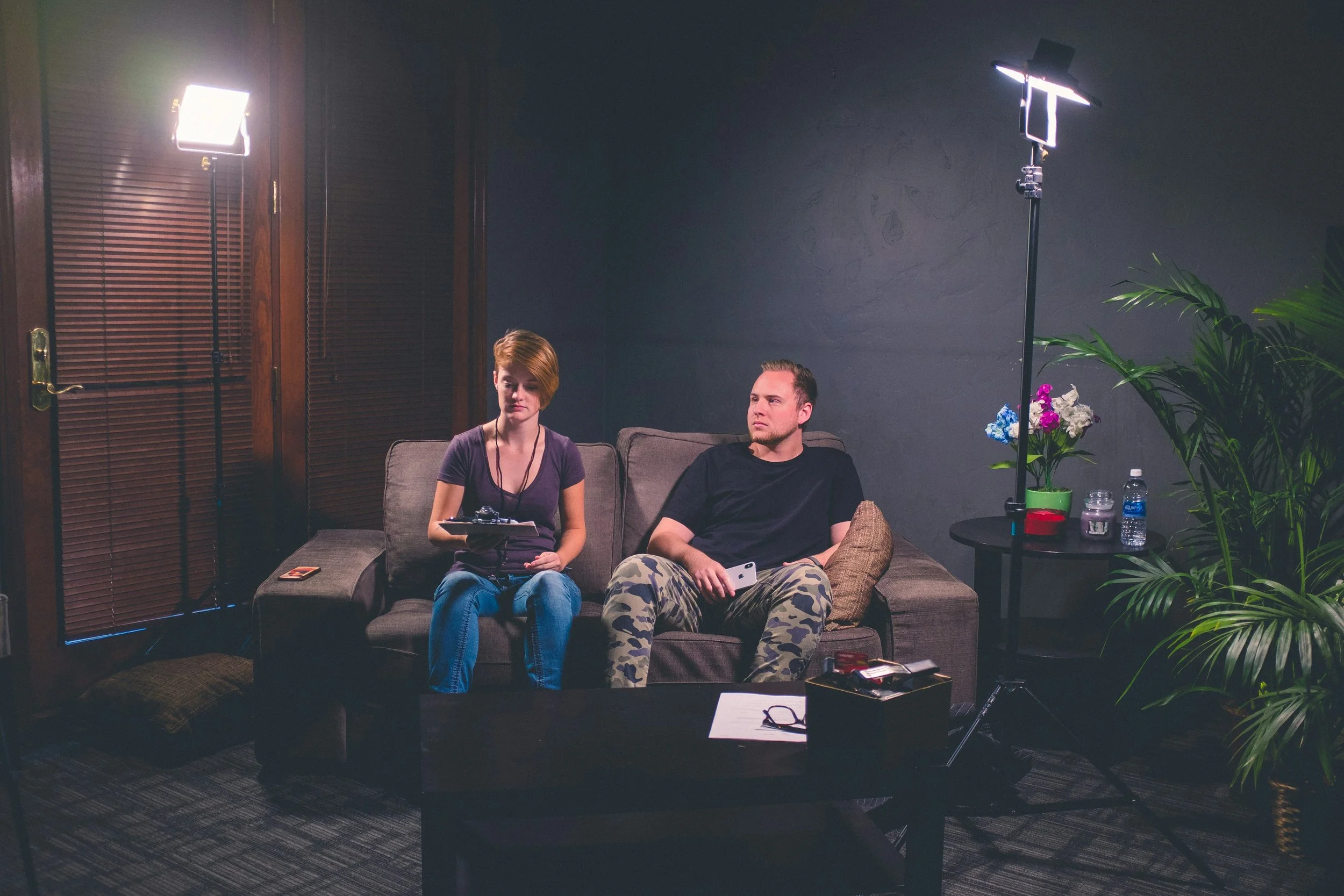
This doesn't mean every testimonial needs a massive production budget. It means the basics need to be right: clean audio, proper lighting, a background that doesn't distract from the speaker.
For audio, invest in lavalier microphones or shotgun mics positioned correctly. Poor audio undermines credibility faster than any visual issue. Viewers will tolerate imperfect video if they can hear clearly.
Lighting should flatter your subject without looking artificial. Natural light from a window works beautifully when positioned correctly. Simple three-point lighting setups cost little but transform the professionalism of your output.
The background should feel natural to your subject's environment while avoiding visual clutter. An office setting works for B2B testimonials. A home environment suits consumer products. The key is authenticity, not set design.
The Interview Framework That Draws Out Compelling Stories
Structure your testimonial interviews to capture the complete story arc while keeping energy high.
Open with comfortable questions about the person and their role. This settles nerves and establishes rapport while capturing useful context.
Move into the problem state: what challenge they faced, how it impacted their work or life, what they tried before. This section creates the contrast that makes later transformation claims credible.
Then explore the decision process: why they considered your solution, what concerns they had, what convinced them to move forward. This content addresses objections your prospects likely share.
The transformation section captures results: specific improvements, unexpected benefits, emotional shifts. Encourage concrete details, not general praise. Numbers are powerful. Specific stories land better than abstract claims.
Close with forward-looking questions: would they recommend you, what would they tell someone considering the same decision, where do they see the relationship going.
Throughout, follow up on interesting threads. The best soundbites often come from unexpected tangents when subjects feel comfortable enough to share what they actually think.
Strategic Placement for Customer Testimonial Videos
Creating strong testimonial content is half the equation. Placement determines whether that content drives results.
Homepage and Landing Page Integration
A single testimonial video featured on a checkout page drove a 32% increase in sales in one documented case. That specificity matters: placement affects outcomes as much as content quality.
On landing pages, position testimonial videos near your primary call to action. Visitors who watch a relevant testimonial video before clicking convert at significantly higher rates than those who don't.
For homepages, consider whether testimonials should interrupt the scroll or anchor a dedicated section. Testing reveals different answers for different audiences, but the general principle holds: make them visible without making them feel forced.
Product and Service Page Placement
Match testimonial content to specific product or service pages. A testimonial about your consulting services belongs on the consulting page, not buried in a general testimonials section where few visitors venture.
Placement near pricing information addresses objection concerns at the moment they arise. When a prospect sees a customer talking about ROI right next to your pricing, the value calculation shifts.
Email Marketing Integration
Adding video to email increases click-through rates by 200-300%. Testimonial videos specifically convert at premium rates because they deliver social proof when recipients are already primed to engage.
Include testimonial video thumbnails with clear play buttons in nurture sequences, post-demo follow-ups, and consideration-stage campaigns. The video itself can live on a landing page while the email drives the click.
Social Media Distribution Strategies
Social platforms reward video content, and testimonial videos perform particularly well in social feeds. Split-screen formats showing both the speaker and product usage generate 41% more view time than face-only formats.
Carousel formats featuring multiple short testimonial clips achieve 63% swipe-through rates compared to 39% for single long-form posts. This suggests audiences want variety and brevity in social contexts.
Dynamic subtitles are essential for social distribution. Testimonial videos with captions keep viewers engaged for 82% of the video versus 58% without. Most social viewing happens without sound initially.
Advanced Testimonial Video Marketing Tactics
Once your foundation is solid, these approaches increase impact significantly.
Repurposing Across Channels and Formats
Fifty-one percent of brands now repurpose testimonial clips for at least three different platforms, while 28% use them on only one channel. The math favors aggressive repurposing.
From a single testimonial interview, extract multiple assets: the full-length version for your website, 60-second cuts for social, specific soundbites for paid advertising, quote cards for platforms that don't favor video, audio clips for podcast advertising.
This multiplication of value from single production investments is where embedded creative production partnerships prove their worth. Building repurposing into your production workflow from the start yields dramatically better ROI than treating it as an afterthought.
Testimonial Video Series and Campaigns
Moving beyond one-off testimonials to structured series amplifies impact. A quarterly customer story program keeps fresh content flowing while building momentum.
Theme your testimonials around specific use cases, industries, or customer types. This creates relevant content for different prospect segments while building a comprehensive proof library.
Integration With Sales Enablement
Testimonial videos reduce buyer hesitation in 42% of post-demo follow-ups when sent as resources. Equip your sales team with testimonial content organized by use case, objection type, and prospect profile.
The most effective sales teams use testimonials at specific moments: after discovery calls to reinforce fit, before demos to build anticipation, in proposal follow-ups to address lingering concerns.
Measuring Testimonial Video Marketing Performance
Vanity metrics mislead. Focus on indicators that connect to business outcomes.
View Metrics That Actually Matter
Raw view counts tell you little. Engagement rate, the percentage of the video watched, reveals whether your content holds attention. Customer testimonial videos on case study pages average nearly 50% engagement rates, indicating their inherent pull.
Watch for drop-off patterns. If viewers consistently leave at the same point, that segment needs editing or the testimonial itself has structural issues.
Conversion Attribution
Track how testimonial video views correlate with conversion events. Most video platforms integrate with CRMs and analytics tools, allowing you to trace the influence of specific testimonials on pipeline and revenue.
A/B test pages with and without testimonial videos to quantify their direct impact on conversion rates. The results typically justify continued investment.
Long-Term Brand Impact
Some benefits resist immediate measurement. Testimonial videos build brand trust that compounds over time. Customer research, win/loss analysis, and brand tracking studies capture these effects where direct attribution cannot.
Common Testimonial Video Mistakes to Avoid
Production and strategic errors waste resources and undermine trust.
Over-Scripting and Inauthenticity
The moment a testimonial feels scripted, credibility collapses. Audiences detect performance, and the "authentic" quality that makes testimonials valuable disappears.
Guide your subjects. Prepare them. But never script them.
Poor Audio and Technical Quality
44% of marketers have spent $15,000 or more on a single testimonial video production. But quality doesn't require massive budgets. It requires attention to fundamentals, especially audio.
If viewers strain to hear or get distracted by background noise, your testimonial fails before the content has a chance to work.
Ignoring Mobile and Sound-Off Viewing
72% of testimonial video views happen on mobile devices. Content must work on small screens with captions visible.
Optimizing for sound-off viewing means adding dynamic subtitles and ensuring visual elements communicate even without audio context.
Failing to Update Content Regularly
Stale testimonials from years ago signal neglect. Build ongoing capture into your customer relationship processes. The freshest proof wins.
Building Your Testimonial Video Marketing Program
Implementation requires realistic planning and sustainable processes.
Starting Point Recommendations
Begin with your best customer relationships. Reach out to those who have expressed satisfaction, asked to refer others, or achieved notable results.
Capture three to five strong testimonials before worrying about optimization. Content volume creates options for placement and testing.
Scaling Production Over Time
Adoption of video testimonials among mid-sized businesses grew 43% last year compared to 19% the year before. The competitive landscape is shifting.
As you scale, systematize your approach. Create standard interview frameworks, quality checklists, and repurposing workflows. Consistency in process enables consistency in output.
When to Bring in Production Partners
SaaS companies using video testimonials in onboarding flows saw a 28% increase in trial-to-subscription conversions compared to 15% with standard email onboarding alone. Results like these justify investment.
External production support makes sense when internal capacity limits output, when quality requirements exceed current capabilities, or when strategic guidance could improve results. The right creative production partner embeds with your team rather than operating as a disconnected vendor.
FAQ: Testimonial Video Marketing Questions
How long should a testimonial video be?
Research shows 60-90 seconds hits the sweet spot for most purposes. This length allows complete story arcs while respecting attention spans. Longer cuts work for case study pages where visitors arrive with specific intent. Shorter clips serve social media distribution.
What makes a testimonial video convert better?
Specificity converts. Concrete numbers, named outcomes, and detailed transformation stories outperform general praise. Emotional authenticity matters more than production polish. Real moments of genuine reflection create connection.
How many testimonial videos do I need?
74% of major companies produce at least five video testimonials per year. The minimum viable testimonial library includes enough variety to address your main customer segments and use cases. Most businesses benefit from continuous addition rather than single production bursts.
Where should testimonial videos appear on my website?
Place testimonials near decision points: on product pages close to pricing, on landing pages above calls to action, on checkout pages where final conversion happens. A dedicated testimonials page matters less than strategic placement throughout the buyer journey.
How do I get customers to agree to video testimonials?
Ask customers who have already expressed satisfaction. Frame the request around their success story rather than your marketing needs. Offer to handle all logistics. Some brands offer modest incentives, though genuine enthusiasm produces better results than compensation.
Do testimonial videos help with SEO?
Search engine algorithms in 2025 favor pages with embedded videos, especially authentic testimonials. Video content increases time on page, reduces bounce rates, and creates opportunities for rich snippets. Transcripts provide additional keyword opportunities.
Start Building Trust Through Customer Stories
Effective testimonial video marketing strategies convert because they leverage the most powerful force in purchasing decisions: what other customers actually think.
The brands winning with video testimonials treat them as strategic assets, not afterthoughts. They build systems for consistent production. They place content strategically across the buyer journey. They measure what matters and optimize accordingly.
Whether you're starting your first testimonial capture or scaling an existing program, the fundamentals remain constant: authentic customer stories, properly produced and strategically placed, build the trust that drives growth.
Ready to build a testimonial video marketing program that actually converts? Contact The Aux Co to discuss how we embed with your team to execute ambitious creative production without the traditional agency overhead.