
OOH Is Having a Moment—and Production Is the Reason
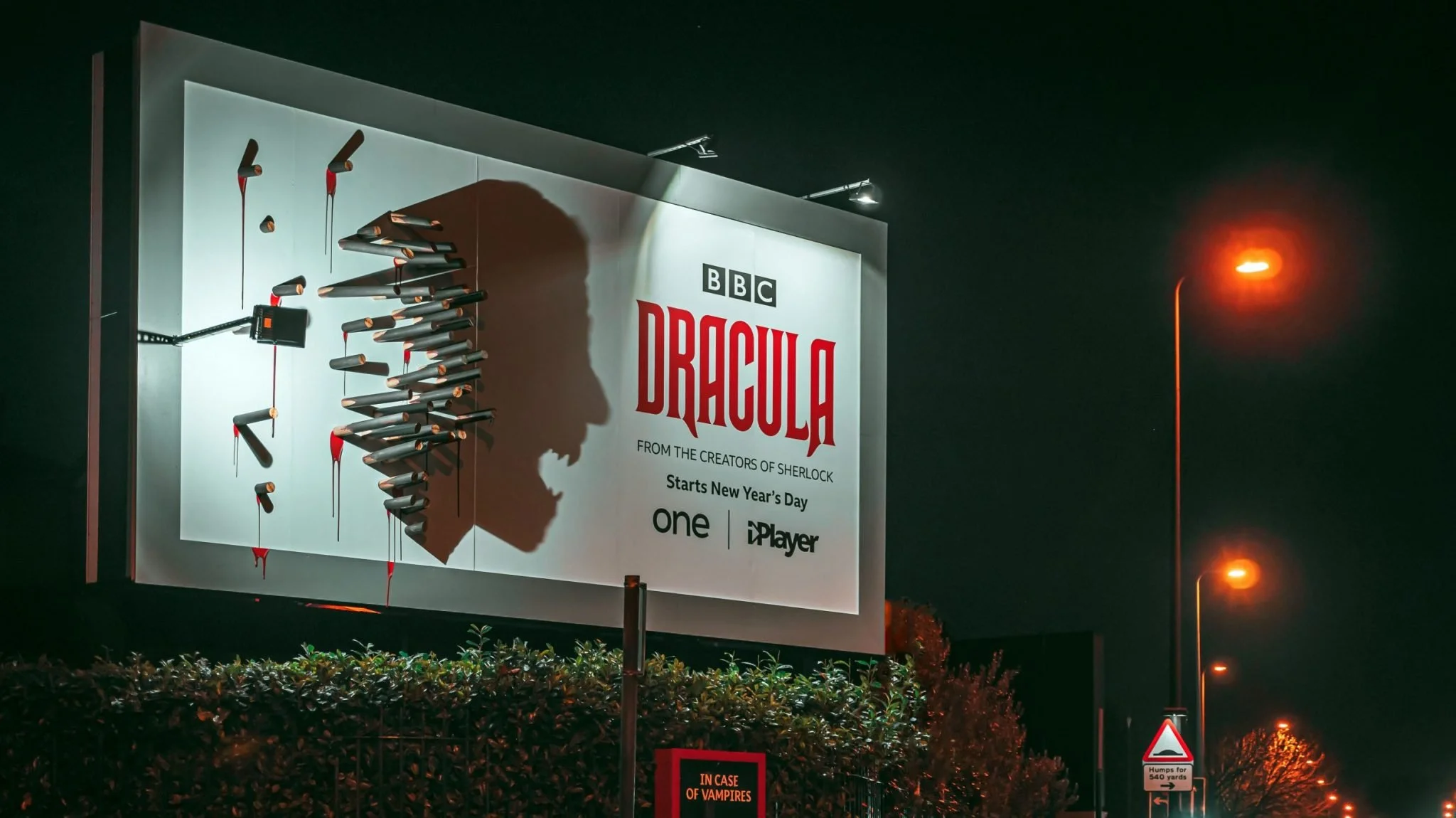
A billboard with bloody stakes jammed into a white canvas sits on a busy London street. During the day, it looks like a crime scene. At night, a spotlight flips on and those stakes cast the shadow of Count Dracula across the entire board. Pedestrians stop. Phones come out. Within hours, the campaign goes viral across every continent.
That was BBC Creative's Dracula billboard. Nobody talked about the media buy. Nobody praised the CPM. The conversation was entirely about how it was built.
Out-of-home advertising is posting record-breaking numbers heading into 2026. U.S. OOH revenue hit $6.98 billion through Q3 2025, marking eighteen consecutive quarters of growth according to the Out of Home Advertising Association of America (OAAA). Global spending reached nearly $50 billion last year. Brands are pouring money into the channel because, in a world drowning in skippable content, physical presence still commands attention.
The part the trade press keeps glossing over: the medium is only as good as the team that builds it. The campaigns earning awards, social shares, and real consumer action are production stories, not media stories. The gap between a forgettable billboard and a cultural moment comes down to execution.
Why Out-of-Home Advertising Momentum Is Carrying Into 2026
After the pandemic nearly gutted the industry, OOH staged a comeback that few predicted, and the momentum shows no signs of slowing. Q3 2025 set an all-time record at $2.13 billion in quarterly revenue. Digital OOH (DOOH) grew 11.6% in that same quarter, now accounting for 35% of total spend. Transit advertising surged 11.4%. Of the top 100 OOH advertisers, 65 increased spend year over year, with 19 more than doubling their investment. Industry forecasts project U.S. OOH spend reaching $10.48 billion by 2028, with consistent annual growth between 3% and 5%.
The brands leading the charge read like a who's who of companies that understand attention: Apple, Nike, Google, Amazon, Netflix, Samsung, Disney. These organizations aren't throwing money at billboards out of nostalgia. They're doing it because the data supports it.
According to a joint study by the OAAA and The Harris Poll, 73% of consumers view DOOH ads favorably, significantly higher than television (50%), social media (48%), or online ads (37%). When OOH creative is visually bold or cleverly executed, 80% of consumers say they're more likely to take action. That's the part brands should circle in red: the action is tied to creative execution, not placement.
OAAA President and CEO Anna Bager called OOH "probably the best medium, especially these days when there are really no other broadcast mediums left." Broadcast reach without standout creative, though, is just expensive wallpaper.
The OOH Campaigns Everyone Talks About Are Production Feats
Look at the OOH work that actually breaks through, and you'll find a production team at the center of every one.
BBC's Dracula Billboard: Shadow Engineering Meets Storytelling
BBC Creative's Dracula special-build remains one of the most celebrated OOH executions of the last decade. The concept was deceptively simple: during the day, a white billboard with protruding 3D stakes. At night, a precisely positioned spotlight turned those stakes into the unmistakable silhouette of Dracula's face, fangs and all. A glass case labeled "In case of vampires, break glass" sat below it with a wooden stake inside.
The timelapse went viral with over seven million views. It earned a D&AD award and was named one of The Drum's best OOH ads in history. None of that happens without a production team that could engineer shadow angles, fabricate custom 3D elements, coordinate lighting rigs, and install across two cities. The creative idea was strong. The production made it real.
Dreamies 'Ad Attack': Hand-Crafted Chaos at Street Level
In 2025, cat treat brand Dreamies and adam&eveDDB London launched an OOH campaign that turned Shoreditch into a feline playground. Hand-painted fiberglass cats, modeled from 3D renders of real cat behavior, were installed scaling drainpipes, clinging to rooftops, and swarming billboards on Kingsland Road and Quaker Street. Every cat was different. Every installation was site-specific.
The execution required coordination between the creative agency, media partners including Jack Agency/Build Hollywood and Blow Up Outdoor, and a production team capable of fabricating, painting, and installing dozens of custom sculptures in high-traffic urban locations. It wasn't a bought impression. It was a built experience. That's why it dominated social feeds and industry press for weeks.
Times Square Takeovers: When Screens Become Stages
Times Square is the most visible OOH real estate on the planet. Buying a rotation on a screen there gets you about three seconds of attention. The brands that actually make an impact treat it as a production challenge, not a media placement.
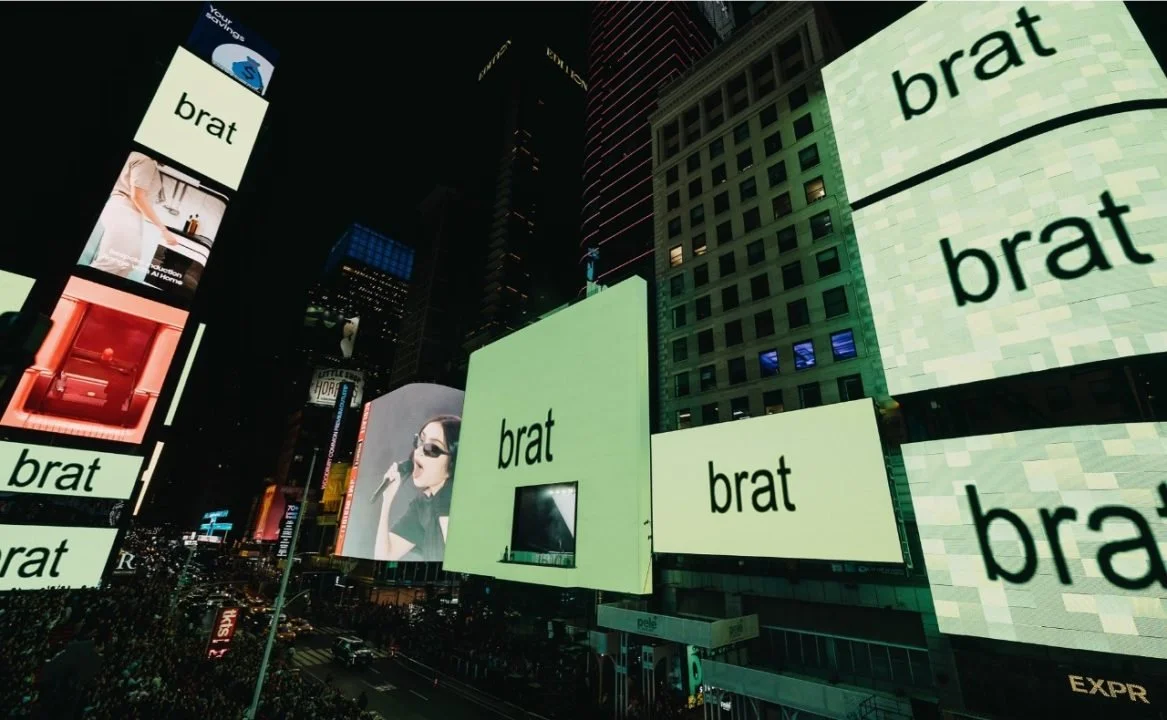
When H&M reopened its Times Square flagship in late 2024, they coordinated a synchronized takeover of every screen in the square, timed to a surprise Charli XCX concert announced just 30 minutes prior on social media. The production team managed synchronized live video across a dozen digital billboards, orchestrated multi-screen content, and coordinated event logistics in real time. The result was an immersive citywide event that blended OOH, live performance, and social content into one moment.
When 2K Games launched Marvel's Midnight Suns, BCN Visuals created anamorphic 3D content that made a three-story Hulk appear to burst through the billboard. Over 60 Hollywood animators and VFX artists built virtual reality replicas of Times Square to test vantage points and glare. Clear Channel Outdoor's SVP of creative called it one of the best uses of their billboard to date. The campaign won a Clio Entertainment Award.
These aren't media wins. They're production wins.
Why Production Execution Is the Real OOH Differentiator
The gap between a forgettable OOH ad and a campaign that earns cultural relevance almost always comes down to execution. Buying the space is table stakes. What you do with the space is what matters.
Here's why production separates work that wins from work that wastes money:
OOH creative has to work in the physical world. It interacts with sunlight, weather, pedestrian flow, architecture, and sightlines. A great concept that can't be engineered, fabricated, or installed properly never becomes a great campaign.
The best OOH is site-specific. Every location has different dimensions, viewing angles, traffic patterns, and environmental factors. Cookie-cutter creative slapped across multiple placements is how brands waste OOH budgets.
Production drives earned media. The Dracula billboard didn't go viral because of the media buy. It went viral because someone filmed the physical transformation and shared it. That's production creating its own amplification. The OAAA found that one in seven OOH viewers snap a photo and share it on social media.
Execution timelines are compressed. OOH often operates on tight install windows in high-traffic urban locations. You need a team that can scope, source, build, and install under pressure without the work suffering.
When brands think of OOH as purely a media line item, they end up with static creative stretched across a billboard. When they think of it as a production challenge, they end up with installations people photograph, share, and talk about.
What 20+ Years of OOH Production Actually Looks Like
This is where theory meets the job site. Over two decades in creative production, Dani Dufresne and The Aux Co have executed OOH campaigns that required the kind of cross-disciplinary production thinking most agencies don't have in-house.
We've live-streamed onto Times Square billboards and built customized OOH takeovers, coordinating live feeds, testing signal quality in real-world conditions, managing content delivery across multiple screens, and building backup plans for every technical failure point. One missed connection means broadcasting dead air to a quarter-million people a day.
We've strategically timed sidewalk billboards in New York so every ad along a route pointed pedestrians to a specific store. As you walked, you didn't miss a single message because the timing was calibrated to foot traffic patterns. That level of precision requires understanding the connection between media placement and production execution, not treating them as separate departments.
We've done full airport buyouts where we customized creative for the specific audience traveling through each terminal. Boats off the coast of Miami with audience-tailored messaging. Billboards where we changed the creative every few days to simulate bites being taken out of it, with imagery so photo-real the board appeared to be physically degrading.
When we worked with NFT artists on a brand launch, every asset was customized for where it would be seen and how people would interact with it. Billboards in Times Square, hand-painted walls, boats off Miami, no two placements ran the same creative. The result was a campaign you couldn't escape, yet you never saw the same thing twice. That's production thinking applied to media strategy.
The common thread: production was embedded from day one, not bolted on at the end. When I'm sitting with creatives during development, I'm not asking "what can we cut." I'm asking "how do we make this bigger." That's the difference between OOH that fills space and OOH that stops people in their tracks.
How to Build OOH Campaigns That Actually Perform
Whether you're a brand manager, a creative director, or an agency founder delivering standout OOH work, these principles separate campaigns that get shared from the ones that get ignored:
Bring production into the room early. The Dracula billboard happened because producers and creatives developed the concept together—not because someone handed a finished idea to a fabrication shop.
Design for the specific location. The Dreamies cats worked because they interacted with the actual buildings they were installed on. Site-specific creative outperforms generic creative every time.
Think about the second screen. The most successful recent OOH campaigns are built to be captured and shared. If your creative doesn't look compelling in a phone photo or a 10-second video, you're leaving amplification on the table.
Invest in craft. Hand-painted fiberglass cats. Precisely angled shadow stakes. Synchronized multi-screen content. Production quality is the difference between an ad and an experience.
Stop separating media and production planning. When media buyers and production teams operate in silos, you get creative that doesn't fit the space. The strongest OOH work treats placement and production as one integrated plan.
The Medium Is Only as Good as the Team That Builds It
OOH is having a moment. Record revenues. Major brands increasing spend. A consumer base that's more likely to act on a billboard than a social ad. The brands that capitalize on this in 2026 will be the ones who understand that buying the space is the easy part.
The Dracula shadow build. The Dreamies fiberglass cats. The Times Square takeovers that turn screens into stages. Every one of these is a production story. The creative idea matters, obviously. The idea is also worthless without a team that can scope, source, fabricate, coordinate, install, and troubleshoot under pressure.
OOH production isn't a line item. It's the whole game.
If your agency is planning ambitious OOH work and doesn't have production embedded from the start, you're already behind. The Aux Co brings fractional production expertise directly into creative teams so the wildest ideas get built exactly as imagined, on time, on budget, and at a level of execution that earns attention.
Ready to build OOH campaigns that stop people in their tracks? Let's talk.
Frequently Asked Questions About OOH Production
Why is production so important for OOH campaigns?
OOH lives in the physical world. Creative has to be engineered, fabricated, and installed in real environments with real constraints. A concept that looks great in a deck can fall flat if the production team doesn't understand viewing angles, materials, lighting conditions, and installation logistics. Production determines whether a campaign becomes a shareable moment or a forgettable ad.
What is a 'special-build' in OOH advertising?
A special-build is any OOH execution that goes beyond a standard flat billboard: 3D elements, interactive installations, projection mapping, live-streaming screens, custom fabrication, site-specific designs. The BBC Dracula billboard and Dreamies 'Ad Attack' are strong examples of special-builds that earned massive earned media.
How much does OOH production cost?
Costs vary wildly depending on execution. A standard printed billboard might run a few thousand dollars. A custom special-build with 3D elements, lighting rigs, or site-specific fabrication can range from $25,000 to six figures. Cost isn't the primary variable—planning is. A well-produced OOH campaign with a moderate budget will outperform an expensive one with poor execution every time.
How do you measure the success of production-driven OOH?
Standard metrics include impressions, reach, and frequency based on traffic data. For production-driven OOH, earned media value is often the biggest ROI driver, viral social reach can dwarf the original media buy. The OAAA reports that 76% of consumers who used their phone after seeing an OOH ad searched for the advertiser. Brands also track store visits, search lift, and mobile engagement.
Can smaller agencies produce ambitious OOH campaigns?
Absolutely. Ambitious OOH doesn't require a massive internal production department. It requires access to the right production expertise at the right time. Fractional production models bring senior-level producers with OOH experience into agency teams on a project basis, without the overhead of permanent hires.