
How to Build a Testimonial Video Marketing Plan That Drives Real Results
Most brands produce testimonial videos reactively. A customer says something nice, someone grabs a camera, the footage goes to the website, everyone moves on. No strategy. No funnel connection. No system.
A testimonial video marketing plan connects production to business objectives, maps content to buyer stages, builds systems for consistent output, and creates measurement that proves value. It turns occasional marketing collateral into a strategic growth engine.
Why Every Brand Needs a Testimonial Video Strategy (Not Just Videos)
A strategy defines who you're producing for, what funnel stages each video supports, where it will be distributed, how frequently you'll produce, and how you'll measure success. Without these decisions, production becomes sporadic, unfocused, and impossible to tie to outcomes.
Brands with documented strategies produce more consistently, distribute more effectively, and report higher ROI satisfaction than brands producing ad hoc.
Step 1: Audit Your Current Social Proof Assets
Take stock of what you already have. Most brands have more raw material than they realize: written reviews, NPS comments, support transcripts, sales call recordings, and existing video that may not have been optimized or distributed.
Catalog everything. Note which segments, industries, and use cases are well-represented and where gaps exist. This audit becomes the foundation for prioritizing production.
Look at existing videos with fresh eyes. Older content may never have been repurposed for social. Raw footage may yield multiple clips. Written case studies may serve as creative briefs for video versions. The audit also reveals positioning gaps: if every testimonial comes from one vertical, you have a credibility problem with prospects in others.
Step 2: Identify Your Highest-Impact Customer Stories
Not all stories carry equal weight. The highest-impact ones: the customer represents a segment you're selling into, the problem is one your audience recognizes, outcomes are specific and measurable, and the customer can articulate their experience compellingly.
Prioritize stories that fill audit gaps. Talk to your sales team. They know which stories resonate in prospect conversations and which objections need social proof support.
Step 3: Map Testimonials to Buyer Journey Stages
Different stories serve different funnel stages. Mapping ensures you produce content for the full journey, not just one moment.
Awareness-Stage Testimonials
Prospects are recognizing they have a problem, not evaluating solutions. Focus on the problem and its emotional weight. These work well in organic social and content marketing, attracting people who identify with the challenge.
Consideration-Stage Testimonials
Prospects are comparing options. Focus on the evaluation and decision process: what the customer considered, why they chose your solution, what implementation looked like. Industry-specific testimonials are most effective here.
Decision-Stage Testimonials
The prospect needs final validation. Focus on specific results, ROI, and the working experience. Place on pricing pages, in proposal follow-ups, and in final sales sequences.
Specificity is everything at this stage. Produce multiple decision-stage testimonials addressing common objections. Implementation concerns? Feature smooth onboarding. Scalability worries? Feature a customer who's grown significantly since adoption.
Step 4: Plan Production at Scale
Build a production cadence, not a series of one-offs. A quarterly sprint works for most organizations: four to six customers per quarter, batched into one or two shoot days, with post-production yielding multiple deliverables per interview.
Standardize with a production brief template covering story arc, funnel stage, audience segment, distribution channels, and key outcomes. Batched production reduces costs significantly by eliminating redundant setup and logistics. Build a roster of production partners who know your brand so you're not onboarding new vendors every project.
Step 5: Build Your Distribution Cadence
Production without distribution is waste. Map each video to primary and secondary channels. Schedule distribution in waves: initial launch to your existing audience, then follow-up waves with different hooks and captions to extend reach. A single video can support four to six distribution moments per quarter with fresh creative framing.
Step 6: Measure, Learn, and Iterate
Build a measurement framework that tracks both content performance (views, engagement, completion rates) and business impact (conversion lift, pipeline influence, sales cycle acceleration).
Review performance quarterly. Which testimonial videos generated the most engagement? Which drove the most conversions? Which customer stories resonated most with which audience segments? Use these insights to inform the next quarter's production priorities.
Sample 90-Day Testimonial Video Marketing Plan
Weeks 1-2: Audit existing content, identify six customers, build production brief template, set up tracking (UTM parameters, video analytics, CRM integration).
Weeks 3-4: Pre-production planning, customer briefs, schedule shoots, confirm distribution channels and format requirements.
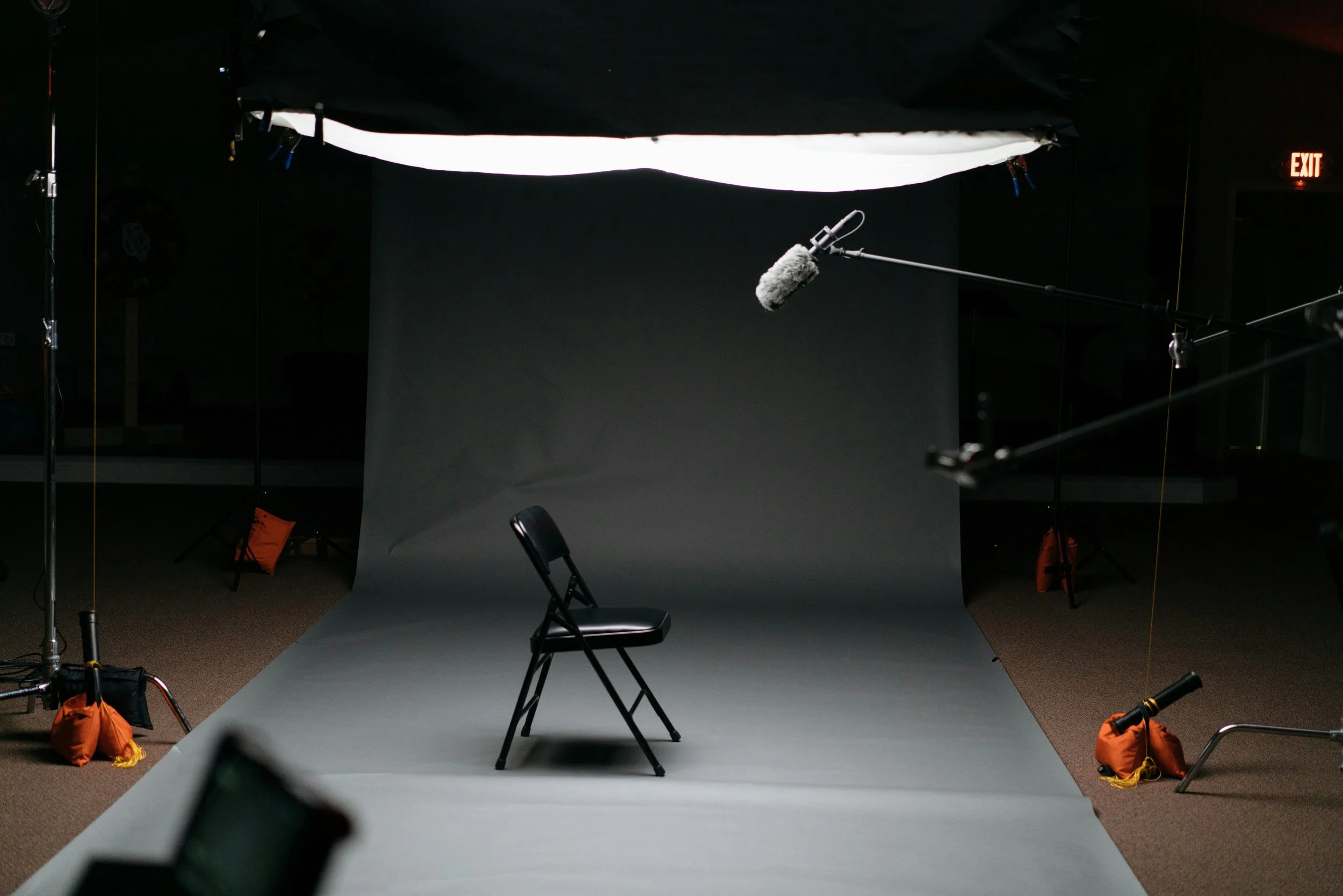
Weeks 5-6: Execute production. Shoot with multiple formats in mind. Every day should generate material for full-length videos, short social clips, and sales enablement assets.
Weeks 7-8: Post-production. Each testimonial should yield minimum five assets: full-length, 60-second highlight, 30-second sales clip, 15-second hook, pull-quote graphic.
Weeks 9-10: Launch distribution, activate sales enablement. Brief the sales team with easy-access links and suggested use cases.
Weeks 11-12: Measure performance, gather feedback, begin planning next quarter based on results.
This cycle, repeated quarterly, builds a library that compounds in value. Each iteration improves on the last.